
Tuesday, June 26, 2012

Tuesday, June 12, 2012
Saturday, June 2, 2012
The Latest Ribbon Device Blog, Understanding the similarities between key signatures.
http://ping.fm/sINCy
http://ping.fm/sINCy
Understanding the similarities between key signatures.
Understanding the similarities between key signatures.
Let me first show you a chromatic scale starting on C.
These are all the notes there are period, there are only 12 in total.
(Unless you are using quarter tones, but we can save that for another topic)
| 1 | b2 | 2 | b3 | 3 | 4 | #4 | 5 | b6 | 6 | b7 | 7 | 1 |
| C | Db | D | Eb | E | F | F# | G | Ab | A | Bb | B | C |
As you can see in the scale above I have also numbered the alphabetical letters.
I believe that numbers are far faster to use when judging distances, unless of course
you love algebra.
Now lets have a look at the C major scale
| 1 | | 2 | | 3 | 4 | | 5 | | 6 | | 7 | 1 |
| C | | D | | E | F | | G | | A | | B | C |
As you can see we have only included 7 of the 12 notes from the chromatic scale.
Now lets have a look at the G major scale.
| 1 | | 2 | | 3 | 4 | | 5 | | 6 | | 7 | 1 |
| G | | A | | B | C | | D | | E | | F#| G |
As you can see the C major & G major scale use mostly the same notes except for
F# in the G major scale.
But most importantly you can also see that they both use the same number pattern,
which is:
| 1 | | 2 | | 3 | 4 | | 5 | | 6 | | 7 | 1 |
leaving out these notes of the chromatic scale.
| | b2 | | b3 | | | #4 | | b6 | | b7 | | |
Both of these scales will sound similar as they are both using the same numbered distances.
To give you another example, if I was to play the song Smoke on the water in the key of C
it would still be the same song if I played it in the key of G.
Another example is that you can say "hello" in English & "ciao" Italian. They both mean
the same thing but use different alphabetical letters.
Most students I find place to much importance on the alphabetical letters and wind up
getting confused. Its far more straight forward to use the numbers. Many great Jazz musicians
& classical composers use this method as it requires less algebra. Allowing them to concentrate on
being creative.
Next week I will explain how to get the most out of using the numbers in replace of alphabetical letters.
Here is a list of all the Key Signature for your viewing pleasure.
| 1 | | 2 | | 3 | 4 | | 5 | | 6 | | 7 | 1 |
| C | | D | | E | F | | G | | A | | B | C |
| 1 | | 2 | | 3 | 4 | | 5 | | 6 | | 7 | 1 |
| G | | A | | B | C | | D | | E | | F#| G |
| 1 | | 2 | | 3 | 4 | | 5 | | 6 | | 7 | 1 |
| D | | E | | F# | G | | A | | B | | C# | D |
| 1 | | 2 | | 3 | 4 | | 5 | | 6 | | 7 | 1 |
| A | | B | | C# | D | | E | | F# | | G# | A |
| 1 | | 2 | | 3 | 4 | | 5 | | 6 | | 7 | 1 |
| E | | F# | | G# | A | | B | | C# | | D# | E |
| 1 | | 2 | | 3 | 4 | | 5 | | 6 | | 7 | 1 |
| B | | C# | | D# | E | | F# | | G# | | A# | B |
| 1 | | 2 | | 3 | 4 | | 5 | | 6 | | 7 | 1 |
| F# | | G# | | A# | B | | C# | |D# | | E# | F# |
| 1 | | 2 | | 3 | 4 | | 5 | | 6 | | 7 | 1 |
| C# | | D# | | E# | F# | | G# | |A# | | B# | C# |
| 1 | | 2 | | 3 | 4 | | 5 | | 6 | | 7 | 1 |
| F | | A | | Bb | C | | D | | E | | F | G |
| 1 | | 2 | | 3 | 4 | | 5 | | 6 | | 7 | 1 |
| Bb | | C | | D | Eb | | F | | G | | A | Bb |
| 1 | | 2 | | 3 | 4 | | 5 | | 6 | | 7 | 1 |
| Eb | | F | | G | Ab | | Bb | | C | | D | Eb |
| 1 | | 2 | | 3 | 4 | | 5 | | 6 | | 7 | 1 |
| Ab | | Bb | | C | Db | | Eb | | F | | G | Ab |
| 1 | | 2 | | 3 | 4 | | 5 | | 6 | | 7 | 1 |
| Db | | Eb | | F | Gb | | Ab | | Bb | | C | Db |
| 1 | | 2 | | 3 | 4 | | 5 | | 6 | | 7 | 1 |
| Gb | | Ab | | Bb | Cb | | Db | | Eb | | F | Gb |
| 1 | | 2 | | 3 | 4 | | 5 | | 6 | | 7 | 1 |
| Cb | | Db | | Eb | Fb | | Gb | |Ab | | Bb | Cb |
Let me first show you a chromatic scale starting on C.
These are all the notes there are period, there are only 12 in total.
(Unless you are using quarter tones, but we can save that for another topic)
| 1 | b2 | 2 | b3 | 3 | 4 | #4 | 5 | b6 | 6 | b7 | 7 | 1 |
| C | Db | D | Eb | E | F | F# | G | Ab | A | Bb | B | C |
As you can see in the scale above I have also numbered the alphabetical letters.
I believe that numbers are far faster to use when judging distances, unless of course
you love algebra.
Now lets have a look at the C major scale
| 1 | | 2 | | 3 | 4 | | 5 | | 6 | | 7 | 1 |
| C | | D | | E | F | | G | | A | | B | C |
As you can see we have only included 7 of the 12 notes from the chromatic scale.
Now lets have a look at the G major scale.
| 1 | | 2 | | 3 | 4 | | 5 | | 6 | | 7 | 1 |
| G | | A | | B | C | | D | | E | | F#| G |
As you can see the C major & G major scale use mostly the same notes except for
F# in the G major scale.
But most importantly you can also see that they both use the same number pattern,
which is:
| 1 | | 2 | | 3 | 4 | | 5 | | 6 | | 7 | 1 |
leaving out these notes of the chromatic scale.
| | b2 | | b3 | | | #4 | | b6 | | b7 | | |
Both of these scales will sound similar as they are both using the same numbered distances.
To give you another example, if I was to play the song Smoke on the water in the key of C
it would still be the same song if I played it in the key of G.
Another example is that you can say "hello" in English & "ciao" Italian. They both mean
the same thing but use different alphabetical letters.
Most students I find place to much importance on the alphabetical letters and wind up
getting confused. Its far more straight forward to use the numbers. Many great Jazz musicians
& classical composers use this method as it requires less algebra. Allowing them to concentrate on
being creative.
Next week I will explain how to get the most out of using the numbers in replace of alphabetical letters.
Here is a list of all the Key Signature for your viewing pleasure.
| 1 | | 2 | | 3 | 4 | | 5 | | 6 | | 7 | 1 |
| C | | D | | E | F | | G | | A | | B | C |
| 1 | | 2 | | 3 | 4 | | 5 | | 6 | | 7 | 1 |
| G | | A | | B | C | | D | | E | | F#| G |
| 1 | | 2 | | 3 | 4 | | 5 | | 6 | | 7 | 1 |
| D | | E | | F# | G | | A | | B | | C# | D |
| 1 | | 2 | | 3 | 4 | | 5 | | 6 | | 7 | 1 |
| A | | B | | C# | D | | E | | F# | | G# | A |
| 1 | | 2 | | 3 | 4 | | 5 | | 6 | | 7 | 1 |
| E | | F# | | G# | A | | B | | C# | | D# | E |
| 1 | | 2 | | 3 | 4 | | 5 | | 6 | | 7 | 1 |
| B | | C# | | D# | E | | F# | | G# | | A# | B |
| 1 | | 2 | | 3 | 4 | | 5 | | 6 | | 7 | 1 |
| F# | | G# | | A# | B | | C# | |D# | | E# | F# |
| 1 | | 2 | | 3 | 4 | | 5 | | 6 | | 7 | 1 |
| C# | | D# | | E# | F# | | G# | |A# | | B# | C# |
| 1 | | 2 | | 3 | 4 | | 5 | | 6 | | 7 | 1 |
| F | | A | | Bb | C | | D | | E | | F | G |
| 1 | | 2 | | 3 | 4 | | 5 | | 6 | | 7 | 1 |
| Bb | | C | | D | Eb | | F | | G | | A | Bb |
| 1 | | 2 | | 3 | 4 | | 5 | | 6 | | 7 | 1 |
| Eb | | F | | G | Ab | | Bb | | C | | D | Eb |
| 1 | | 2 | | 3 | 4 | | 5 | | 6 | | 7 | 1 |
| Ab | | Bb | | C | Db | | Eb | | F | | G | Ab |
| 1 | | 2 | | 3 | 4 | | 5 | | 6 | | 7 | 1 |
| Db | | Eb | | F | Gb | | Ab | | Bb | | C | Db |
| 1 | | 2 | | 3 | 4 | | 5 | | 6 | | 7 | 1 |
| Gb | | Ab | | Bb | Cb | | Db | | Eb | | F | Gb |
| 1 | | 2 | | 3 | 4 | | 5 | | 6 | | 7 | 1 |
| Cb | | Db | | Eb | Fb | | Gb | |Ab | | Bb | Cb |
Monday, May 21, 2012
What are key signatures? A key signature is a group of either sharps (#) or flats (b) that sit between the treble or bass clef & the time signature at the start of a piece of music. The number of sharps or flats tells you what key the piece of music is in. For example if the key signature has 3 sharps the song will either be in A major or F# minor. Ok so now thats out of the way lets understand why you want to know this stuff. Say you want to work out a piece of music by ear then you will need to have some boundaries. In music we only have 12 different notes (on a piano thats 7 white notes & 5 black notes), this is our widest boundary. Now in most songs we don't use all 12 notes, that would be like making a sandwich with the entire contents of the fridge. Instead we commonly use a selection of 7 notes out of the 12, which we call scales. (There are many different scales out there but to understand key signatures we are going to keep to the basic major scale.)
To give you a visual of this here are all 12 notes or our widest boundary:
| 1 | b2 | 2 | b3 | 3 | 4 | #4 | 5 | b6 | 6 | b7 | 7 | 1 |
| C | Db | D | Eb | E | F | F# | G | Ab | A | Bb | B | C |
And here is 7 of the 12 notes or the "C major scale" or we can also call this the key of "C major".
| 1 | | 2 | | 3 | 4 | | 5 | | 6 | | 7 | 1 |
| C | | D | | E | F | | G | | A | | B | C |

As you can see that the Key of C major has no sharps or flats in the scale. And in example 1 below you can see there are no sharps or flats in between the treble clef & the time signature. Therefore this song is in the key of C major.
Here is the "G major scale" or we can also call this the key of "G major".
| 1 | | 2 | | 3 | 4 | | 5 | | 6 | | 7 | 1 |
| G | | A | | B | C | | D | | E | | F#| G |
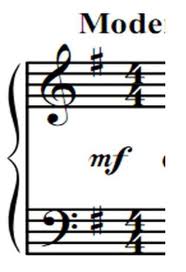
As you can see that the Key of G major has 1 sharp in the scale. So in the example below you can see 1 sharp in between the treble or bass clef & the time signature.
The way I like to understand the word "key signature" is by thinking of these words separately.
We use a "key" to unlock something and a "signature" is a proof of identity.
Next week I will talk more about the similarities between different key signatures.
cheers
Mat
To give you a visual of this here are all 12 notes or our widest boundary:
| 1 | b2 | 2 | b3 | 3 | 4 | #4 | 5 | b6 | 6 | b7 | 7 | 1 |
| C | Db | D | Eb | E | F | F# | G | Ab | A | Bb | B | C |
And here is 7 of the 12 notes or the "C major scale" or we can also call this the key of "C major".
| 1 | | 2 | | 3 | 4 | | 5 | | 6 | | 7 | 1 |
| C | | D | | E | F | | G | | A | | B | C |
As you can see that the Key of C major has no sharps or flats in the scale. And in example 1 below you can see there are no sharps or flats in between the treble clef & the time signature. Therefore this song is in the key of C major.
Here is the "G major scale" or we can also call this the key of "G major".
| 1 | | 2 | | 3 | 4 | | 5 | | 6 | | 7 | 1 |
| G | | A | | B | C | | D | | E | | F#| G |
As you can see that the Key of G major has 1 sharp in the scale. So in the example below you can see 1 sharp in between the treble or bass clef & the time signature.
The way I like to understand the word "key signature" is by thinking of these words separately.
We use a "key" to unlock something and a "signature" is a proof of identity.
Next week I will talk more about the similarities between different key signatures.
cheers
Mat
Thursday, May 17, 2012
Tuesday, May 15, 2012
Sunday, May 13, 2012
Understanding how musical note's relate to each other
Today I would like to share my knowledge on understanding music theory and how the note's relate to each other. The first thing to understand about music is that there are only 12 different note's or sounds. You might like to use the idea that if we were talking about food, then there are only 12 different flavours. All popular western styles of music are built on this idea. The next thing to understand is that some notes will sound good together while others will sound not so good. We call this consonance & dissonance. If we were talking about food then consonance would taste relaxed, like milk & bread while dissonance would taste tense like chocolate dipped sardines. Now not all 12 notes will sound like these extremes but will be either swing one way or the other.
Now if you have ever played a instrument and hit a wrong note then you have experienced one of these chocolate dipped sardines, not so hot are they. So lets look at a way to understand these 12 different sounds. (Now next week I will explain about key signatures but for the moment lets take a leap of faith and play everything in the key of C). In the key of C, C is the first note of the scale so lets call C "one" which makes D "two" E "three" and so on. Also in between each note are chromatics (# sharps & b flats or the black notes on the piano). So Db will be called "flat two", Eb "flat three" and so on.
Here is an easy lay out of the notes & their numbers.
| 1 | b2 | 2 | b3 | 3 | 4 | #4 | 5 | b6 | 6 | b7 | 7 | 1 |
| C | Db | D | Eb | E | F | F# | G | Ab | A | Bb | B | C|
So here is a description of each note (interval) relating back to the first note of the key signature.
C to C or 1 to 1: These notes together sound completely neutral as they are the same note. So they hold no tension and are completely relaxed. I like to call this the "Home" note as its the note you will want to finished your song on (if you want it to sound finished).
C to Db or 1 to b2 : This interval is very tense and will most likely remind you of the shower scene in "Psycho" or if you play it low "Jaws"
C to D or 1 to 2 : This interval is also tense but not so dramatic, but will remind you of an ambulance or police siren.
C to Eb or 1 to b3 : This is known as the sad interval & can be found in all minor chords & scales.
C to E or 1 to 3 : This is known as the happy interval & can be found in all major chords & scales.
C to F or 1 to 4 : This interval is tense but in a majestic kind of way, think of the Queen entering the room. You would most likely feel a little on edge but in a rather royal kind of way.
C to F# or 1 to #4 : This is known as the devil chord and is rather tense. If you were caught writing songs based on the devils chord around the time of the Spanish Inquisition you would have had your head removed. A lot of my metal students love this interval.
C to G or 1 to 5 : The 5th is similar to first note of the key, it is a very relaxed sounding interval. The 5th also a very strong sounding interval and is also called a power chord (commonly used in all forms of rock music). I also like to think of this as your home away from home, such as a holiday house.
C to Ab or 1 to b6 : This interval is tense and rather dark sounding, lots of my gothic/emo students love this interval.
C to A or 1 to 6 : This interval is tense but rather pleasant at the same time. Much like a shower that's a little too hot on a very cold morning.
C to Bb or 1 to b7 : A very funky & tense sounding interval. You hear this in most funk bass lines.
C to B or 1 to7 : Lastly one of the most tense sounding intervals. If you finish your song on this note you audience will forever be left hanging or they will just hate you.
Cheers
Mat
ps next week explaining key signatures
Now if you have ever played a instrument and hit a wrong note then you have experienced one of these chocolate dipped sardines, not so hot are they. So lets look at a way to understand these 12 different sounds. (Now next week I will explain about key signatures but for the moment lets take a leap of faith and play everything in the key of C). In the key of C, C is the first note of the scale so lets call C "one" which makes D "two" E "three" and so on. Also in between each note are chromatics (# sharps & b flats or the black notes on the piano). So Db will be called "flat two", Eb "flat three" and so on.
Here is an easy lay out of the notes & their numbers.
| 1 | b2 | 2 | b3 | 3 | 4 | #4 | 5 | b6 | 6 | b7 | 7 | 1 |
| C | Db | D | Eb | E | F | F# | G | Ab | A | Bb | B | C|
So here is a description of each note (interval) relating back to the first note of the key signature.
C to C or 1 to 1: These notes together sound completely neutral as they are the same note. So they hold no tension and are completely relaxed. I like to call this the "Home" note as its the note you will want to finished your song on (if you want it to sound finished).
C to Db or 1 to b2 : This interval is very tense and will most likely remind you of the shower scene in "Psycho" or if you play it low "Jaws"
C to D or 1 to 2 : This interval is also tense but not so dramatic, but will remind you of an ambulance or police siren.
C to Eb or 1 to b3 : This is known as the sad interval & can be found in all minor chords & scales.
C to E or 1 to 3 : This is known as the happy interval & can be found in all major chords & scales.
C to F or 1 to 4 : This interval is tense but in a majestic kind of way, think of the Queen entering the room. You would most likely feel a little on edge but in a rather royal kind of way.
C to F# or 1 to #4 : This is known as the devil chord and is rather tense. If you were caught writing songs based on the devils chord around the time of the Spanish Inquisition you would have had your head removed. A lot of my metal students love this interval.
C to G or 1 to 5 : The 5th is similar to first note of the key, it is a very relaxed sounding interval. The 5th also a very strong sounding interval and is also called a power chord (commonly used in all forms of rock music). I also like to think of this as your home away from home, such as a holiday house.
C to Ab or 1 to b6 : This interval is tense and rather dark sounding, lots of my gothic/emo students love this interval.
C to A or 1 to 6 : This interval is tense but rather pleasant at the same time. Much like a shower that's a little too hot on a very cold morning.
C to Bb or 1 to b7 : A very funky & tense sounding interval. You hear this in most funk bass lines.
C to B or 1 to7 : Lastly one of the most tense sounding intervals. If you finish your song on this note you audience will forever be left hanging or they will just hate you.
Cheers
Mat
ps next week explaining key signatures
Sunday, May 6, 2012
Cracking Compressors, how to get them to work.
Today I would like to share some knowledge I picked up about compressors.
A while ago a friend told me about a great book on the subject of mixing & recording audio
called "Mixing with your mind" by Michael Paul Stavrou. If your serious about recording music then
I well recommend reading this book.
So compressors, that effect that sounds like its hardly doing anything at all and some case that's exactly what you them to sound like. A compressor does what the name says, it compressors the audio so you don't get those loud peaks that jump out and poke you in the ear. But be warned if you compress too much your audio will lose all its dynamics and your track will sound small & fatiguing to the ear.
The thing I always found hard about compressors was the controls, what they stood for and how to use them. This was until I read cracking compressors by Mr Stavrou. Now I cant share with you that section of the book due to copyright, but I really recommend getting your hands on a copy. Nonetheless here are my thoughts on compressors.
Essentially they squash the signal so the soft & loud become the same volume, now to do that you only really need one knob that gives you more or less squashing. And some compressors operate like this while others give you more control. Now if your going to squash something say like an orange then you want to know how flat you want to make it and the knob titled "ratio" does this. The higher the ratio the flatter the orange. Now you may have a few oranges & you may want some of the big oranges to be the same height as the smaller oranges. So you set the "threshold" so the smaller oranges pass through without being squashed while the tubby ones get squashed down to the same size. Now the "Attack" is how fast your squashing those big fat oranges. If your oranges are traveling along a conveyer belt & the attack is fast then every orange is going to get hit immediately while if the compressor is slow then the front of the orange will stay a little rounded. Now if you want the orange to stretched smeared across the conveyer belt then make sure your "release"is slow so it hangs onto the orange for as long as possible & if you want your orange to stay intact then make the "release" fast.
Well I hope this helps!
cheese
Mat
A while ago a friend told me about a great book on the subject of mixing & recording audio
called "Mixing with your mind" by Michael Paul Stavrou. If your serious about recording music then
I well recommend reading this book.
So compressors, that effect that sounds like its hardly doing anything at all and some case that's exactly what you them to sound like. A compressor does what the name says, it compressors the audio so you don't get those loud peaks that jump out and poke you in the ear. But be warned if you compress too much your audio will lose all its dynamics and your track will sound small & fatiguing to the ear.
The thing I always found hard about compressors was the controls, what they stood for and how to use them. This was until I read cracking compressors by Mr Stavrou. Now I cant share with you that section of the book due to copyright, but I really recommend getting your hands on a copy. Nonetheless here are my thoughts on compressors.
Essentially they squash the signal so the soft & loud become the same volume, now to do that you only really need one knob that gives you more or less squashing. And some compressors operate like this while others give you more control. Now if your going to squash something say like an orange then you want to know how flat you want to make it and the knob titled "ratio" does this. The higher the ratio the flatter the orange. Now you may have a few oranges & you may want some of the big oranges to be the same height as the smaller oranges. So you set the "threshold" so the smaller oranges pass through without being squashed while the tubby ones get squashed down to the same size. Now the "Attack" is how fast your squashing those big fat oranges. If your oranges are traveling along a conveyer belt & the attack is fast then every orange is going to get hit immediately while if the compressor is slow then the front of the orange will stay a little rounded. Now if you want the orange to stretched smeared across the conveyer belt then make sure your "release"is slow so it hangs onto the orange for as long as possible & if you want your orange to stay intact then make the "release" fast.
Well I hope this helps!
cheese
Mat
Friday, May 4, 2012
Thursday, May 3, 2012
Saturday, April 28, 2012
Today I thought I would like to share a quick idea about EQing. I like to think of EQing audio as trimming the fat from instruments that need to work together. For example if you record a guitar track & separate vocal track, you may want the song to sound balanced (guitar & vocals to be at similar volume) but for the vocals to be nice and clear. So this where you will use a EQ (setting of 3000 Hz -9db with a Q of 1) to cut a hole in the guitar track so the vocals can poke through. Now you can turn up the guitar track and your song should sound balanced. Well that's the idea anyway. Of course if you are recording a whole band (guitar, bass & drums) you will want to apply that similar idea over all your tracks.
Another problem you will encounter will be the low frequency's. Always roll off low frequency's below 100 Hz on all instruments except for the Kick drum & the Bass guitar. To much low energy will cause the mastering compressor to drag the rest of the volume down on your song, making it sound quiet.
So to recap its all about cutting off the less important frequency's of some instruments so the more important parts get to poke through.
Here are some websites that I found helpful that are well worth reading over, as there is a lot more to it than my very brief explanation.
http://www.audiorecording.me/complete-eq-settings-to-start-when-doing-audio-mixing.html
http://www.music-articles.com/audiorecording/eq-settings-that-will-make-your-mixes-come-alive---by-john-vestman.html
Cheers
Mat
Another problem you will encounter will be the low frequency's. Always roll off low frequency's below 100 Hz on all instruments except for the Kick drum & the Bass guitar. To much low energy will cause the mastering compressor to drag the rest of the volume down on your song, making it sound quiet.
So to recap its all about cutting off the less important frequency's of some instruments so the more important parts get to poke through.
Here are some websites that I found helpful that are well worth reading over, as there is a lot more to it than my very brief explanation.
http://www.audiorecording.me/complete-eq-settings-to-start-when-doing-audio-mixing.html
http://www.music-articles.com/audiorecording/eq-settings-that-will-make-your-mixes-come-alive---by-john-vestman.html
Cheers
Mat
Saturday, April 21, 2012
The last 2 weeks I have locked myself away in the studio putting finishing touches on the latest Ribbon Device album the "Soft Pedal". Its amazing how many hours you can rack up panning, nudging volume levels, EQing, & compressing. Not to mention how long it takes to write and record all the tracks by yourself. Im sure the obsession & the work practice is not healthy, haha eh yeah.
Its funny in this day and age how you can do everything yourself given some time & a computer. If you have the DIY attitude and believe no task is to great you can really drive yourself bat shit crazy until your hearts content. On one hand it's great you don't have to convince the other band members that your idea is worth pursuing the way you hear it. And then on the other hand you spend far too much time turning over every rock to see if there is some gold you over looked.
All in all Im really happy with the end result & look forward to sharing my madness in the coming months. Cheese Mat
Its funny in this day and age how you can do everything yourself given some time & a computer. If you have the DIY attitude and believe no task is to great you can really drive yourself bat shit crazy until your hearts content. On one hand it's great you don't have to convince the other band members that your idea is worth pursuing the way you hear it. And then on the other hand you spend far too much time turning over every rock to see if there is some gold you over looked.
All in all Im really happy with the end result & look forward to sharing my madness in the coming months. Cheese Mat
Tuesday, April 3, 2012
Subscribe to:
Posts (Atom)